

The year 2026 changed the rules of the online game.If 3 years ago it was enough for you to do classic SEO, today a site that does not appear in ChatGPT, Perplexity or Google AI Overviews loses 30-50% of potential traffic. Welcome to the era of the three pillars: SEO, AEO and GEO.
1. SEO. The classic but evolved foundation
Search Engine Optimization (SEO) remains the foundation. It means optimizing your site so that Google, Bing, and DuckDuckGo understand you, rank you, and show you in search results. In 2026, SEO is no longer just about keyword density and backlinks. Google now uses AI models (Gemini, MUM) that understand the intent behind the search.
What really matters in SEO 2026:
- Core Web Vitals. Page speed, layout stability (CLS), time to first render (LCP). A site with a Lighthouse below 90 is no longer competitive.
- Schema.org structured. Article, FAQPage, BreadcrumbList, LocalBusiness. Structured data is the common language through which the AI reads the website.
- E-E-A-T(Experience, Expertise, Authoritativeness, Trustworthiness). Google wants content written by real people with real experience.
- Mobile-first indexing. Your site is indexed on the mobile version. If it's slow or ugly on the phone, you get punished.
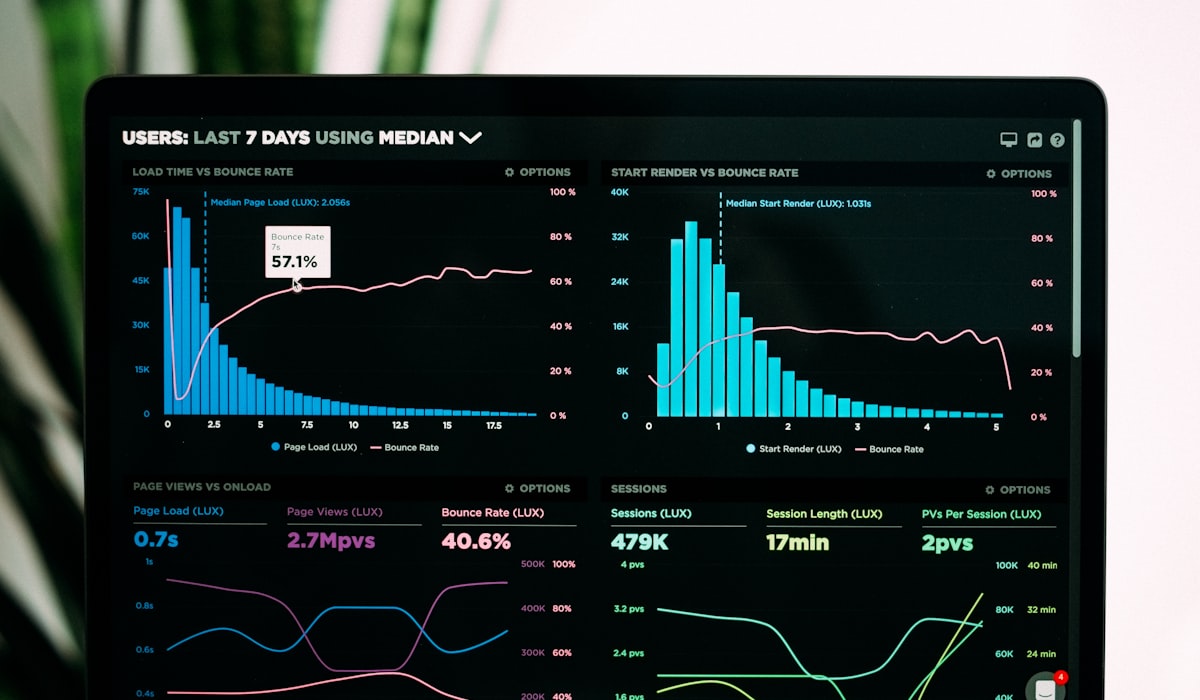
Modern SEO is about data, not intuition. Without analytics and Search Console, you are working with your eyes closed.
2. AEO. Answer Engine Optimization
AEO is engine optimization that doesn't show you 10 blue links, but gives you an answer directly. We are talking about:
- Google AI Overviews (AI generated answers at the top of the SERP)
- ChatGPT with Browse / Search
- Perplexity AI
- Bing Copilot
- Classic Google featured snippets
These engines do not send the user to your site. I'm keeping it with them. The only way you show up is likecited sourcein response.
How to optimize for AEO
- Short and clear answers. For each relevant question in the field, give the answer in the first 50-80 words of the page.
- Schema FAQPage. FAQs marked with structured schema.org for AI to read natively.
- Structured listings. Paragraphs and bullets readable by a parser.
- Verifiable authority. Author cited, links to credible sources, statistics with source.
- Content on long questions(long-tail). "how to do X in 2026" more than "X".
3. GEO. Generative Engine Optimization
GEO is the newest term in the SEO curriculum, clearly appearing only in 2024-2025. It means optimizing your content to beintegrityin responses generated by generative AI models (ChatGPT, Claude, Gemini, Llama).
The difference from AEO is subtle but important: AEO tries to answer a specific question by citing sources. GEO tries to make your site part of the "core knowledge" that the AI uses when generating an answer, even without a direct citation.
Why GEO matters now
In 2025, ChatGPT exceeded 800 million weekly active users. Perplexity does over 100 million monthly searches. Bing Copilot is integrated in Windows 11. All these interfaces partially replace the classic search. If your brand doesn't appear in their answers, you don't exist for a growing portion of your audience.
How to make concrete GEO
- Quotable content. Clear statements with data, easy for an AI model to extract. "The number of active users on X grew by Y% in 2025" is more quotable than "X grew a lot".
- Brands mentioned consistently. Your company name must appear in a relevant context on external sources (press, directories, forums, GitHub). The AI learns who you are from co-occurrences.
- Schema.org Organization and Person. Clear signals about who you are, what you do, where you are active.
- Content on various formats. Text plus video (with transcript), podcast, infographics. Multimodal AI uses all sources.
- Explicit comparisons. "X vs Y" articles are AI's favorites because they provide decision structure.
In short
SEO= appear on Google.
AEO= appears as a direct response.
GEO= The AI integrates you into its core knowledge.
All 3 must be done simultaneously. There is no order of priority in 2026.
How do you integrate the 3 into a unique strategy
The most common mistake is to treat SEO, AEO and GEO as three separate projects. In reality, they are three facets of the same effort:great, technically structured content about a recognized brand.
Specifically, for each page you publish, you should:
- Answer a specific question in the first 80 words (AEO)
- Optimize the title and meta-description for user intent (SEO)
- Add relevant schema.org: Article + FAQPage + Breadcrumb (all 3)
- You cite verifiable sources and mention other credible brands (GEO)
- You ensure speed under 2.5s on LCP and perfect mobile-friendliness (SEO)
- You use semantic structure: single H1, hierarchical H2/H3 (all 3)
Mistakes to avoid in 2026
- AI-generated content without human editing. Google and AIs detect and penalize
- Keyword stuffing. It's been dead for 5 years, we still see sites doing this
- Link farms / link buying. Google is very good at detecting
- Thin content. Under 600 words is too little for a serious article
- Lack of scheme. Without structured markup, the AI can't parse you correctly
Conclusion
A website made in 2026 without an SEO + AEO + GEO strategy is like a billboard in the middle of the desert: it may be artistically excellent, but no one sees it. Investing in optimization is no longer optional, it's business infrastructure.
toXNK Solutionswe integrate all 3 from the first day of design. Structured schema, quotable content, technical performance, brand authority. Because a site that is not found, does not sell.